NDMC Conducts NSTP Evaluation and Replanning for Sustainable Community Programs
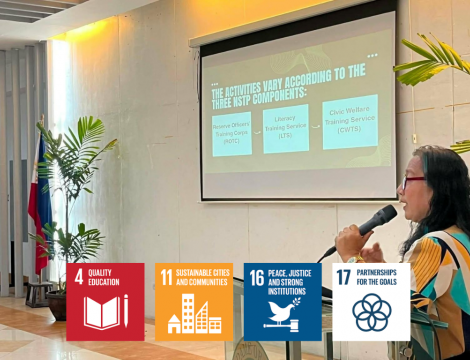
Notre Dame of Midsayap College (NDMC), through its National Service Training Program (NSTP), conducted its annual NSTP Evaluation and Replanning Activity at the Primera Function Hall, anchored on the theme “From Assessment to Action: Building Sustainable Community Programs.” The activity provided an avenue for evaluating previous initiatives, reflecting on community engagement experiences, and developing plans to strengthen future service programs.
The program opened with registration, prayer led by Mr. Paul Vincent C. Espinosa, and the singing of the National Anthem, Midsayap Hymn, and Notre Dame Hymn. Ms. Rosario J. Gapasin delivered the welcome remarks and presented an overview of NSTP activities.
A major highlight was the presentation of accomplishments and documentation from the different colleges and units, namely CITE, CBA, CAS, CED, CN, and ROTC. Faculty members and focal persons shared their respective initiatives, showcasing the contributions of NSTP and ROTC students to partner communities.
The evaluation proper, facilitated by Ms. Ivy Macagba, provided an opportunity to assess program accomplishments, identify strengths and areas for improvement, and gather constructive feedback. In the afternoon, deans and focal persons led reflection and experience-sharing activities, followed by discussions on community needs and problem analysis facilitated by ROTC trainers and the commandant. Mr. Angelo Florague also presented the results of the community needs assessment, which served as a basis for further planning and discussion.
An open forum allowed participants to share recommendations and clarify concerns. The activity concluded with a message from Ms. Bea Jean Marie C. Alarcon, emphasizing the importance of sustained commitment to service and the role of NSTP in developing socially responsible students.
Through this initiative, NDMC reaffirmed its commitment to community engagement, responsible citizenship, leadership, and nation-building. The evaluation and replanning process provided valuable direction for improving existing initiatives and developing sustainable community programs responsive to the needs of partner communities.